The comparison is obvious, right? Netflix’s obstacle course show and crafting a children’s book? Totally the same.
Okay, maybe you wouldn’t immediately put those two things together, but hear me out. They have more in common than you might think. Here’s what three seasons of Ultimate Beastmaster has taught me about writing kid lit:
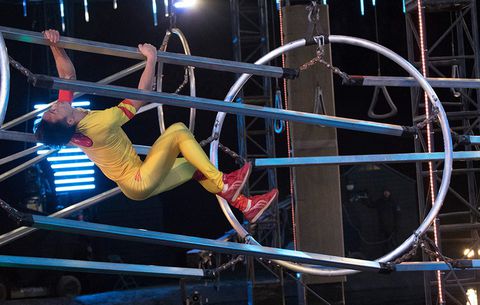
The more versatile you are, the better. Any fan of obstacle course shows knows that as soon as a competitor makes it through one challenge, there’s a new one waiting on the other side. The athletes who fare best on Ultimate Beastmaster instantly adapt their approach to the situation in front of them, whether that’s jumping, climbing, swinging, crawling or running. For writers, each manuscript challenges you in different ways, requiring you to adapt your skill set to deal with it. Dialogue, plot, prose, world-building, character development, emotional arc, physical action — you’ve got to move where the story demands.

There will be setbacks… Athletes trip, they fall. That Point Thruster is just out of reach, the rope slips through their hands. Writing and trying to get published have their share of heartbreak. Rejection letters, bad reviews, lost agents, low sales, missed chances. But …

… There will also be amazing moments of joy. Obstacle courses offer endless ways to fall (literally) flat on your butt. So when a competitor sticks that impossible jump, clambers up the rope after she should have fallen, grips the ledge with the tips of her fingers and pulls herself over the brink, you cheer. Writers face a gauntlet of challenges on the path to publication too. Any win along the way — big or small — feels all the sweeter.

You’re going to have to take a leap. Impossible jumps are a hallmark of Ultimate Beastmaster. Athletes leap off Face Plant for a chain dangling about eight feet away. They jump between Energy Coils ten feet apart. How can anyone bridge that distance? I don’t know, but they all try, whether they think they can do it or not. After all, it’s the only way to advance through the obstacle course. The same goes for writing and trying to get published. Putting words to a page, crafting a story, working through critiques, editing/refining, querying — all are leaps. All require you to put yourself out there. All are terrifying and exhilarating and necessary to make it to the next level.
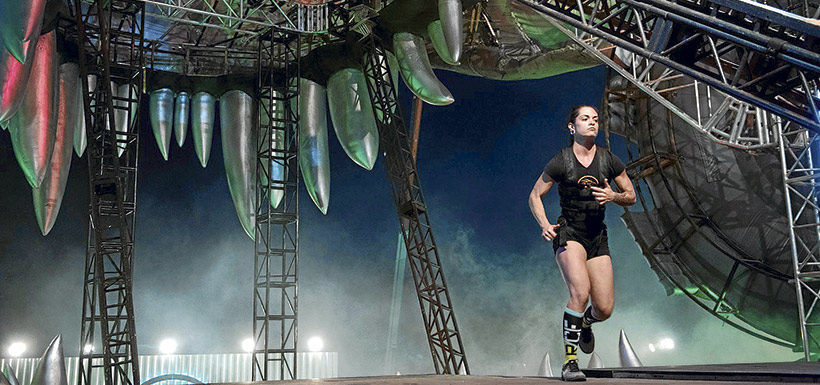
Train, train, train. No one rolls out of bed and competes in Ultimate Beastmaster. Each competitor brings years of training to the course. Their backgrounds are diverse — some are parkour acrobats, some box and do martial arts, some are ex-military, some dance, some climb, some do Cross-Fit. But they’ve each committed to excelling in their chosen areas. The same goes for great writers. Being a good writer requires a heckuva lot of writing. And reading. And critique. Also writing.
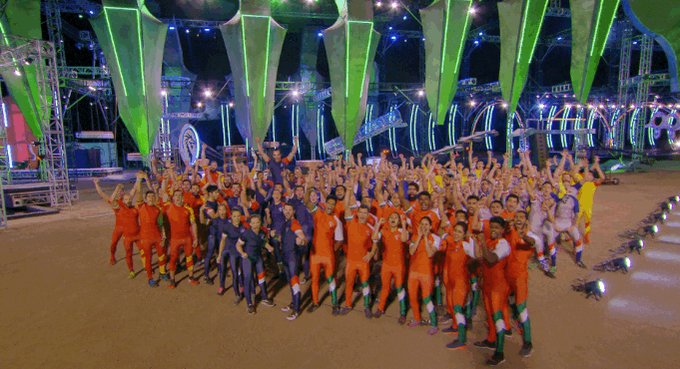
There’s a crew of people rooting for you. Ultimate Beastmaster pits dozens of athletes from nine different countries against each other. Each country supplies two hosts to provide commentary on the event. The benefit of having all those athletes and hosts sitting ringside is that every competitor has a built-in cheer squad. People wave signs, shout cheesy chants and dog-pile on the athletes after they do a good job. They also hug and console each other when they struggle. A support network is similarly critical for kid lit writers. Fellow authors and critique partners, message boards, Twitter, your friends and family all provide votes of encouragement, confidence and condolences when you need them. Lean on them. And give as good as you get.

Laugh early, laugh often. The commentators on Ultimate Beastmaster provide the typical athlete profiles and course explanations you’d expect, but where they excel is in providing comic relief. They banter, they venture into each other’s booths and prank each other, they build jokes over multiple episodes, they dance, they act silly. Their antics are a welcome relief from the mock seriousness of other sports shows. After all, these are athletes going through an obstacle course. They’re not fighting war or famine here. Humor helps keep things in perspective, reminding us at the end of the day that everyone’s human and we’re supposed to be having fun. Ultimate Beastmaster is really just a supersize playground after all. Being able to laugh, to keep a sense of humor when you’re writing and (especially) when you’re trekking the publishing journey will not only save your sanity, it will keep you rooted.
How about you, fellow Ultimate Beastmaster and obstacle course fans? What lessons do you take from the show and apply to your own goals?
© 2018 Rachel Martin. All Rights Reserved.
 Rachel Martin
You must be logged in to post a comment.